Human Interest
NASA Chief Defends Picking an All Male Crew for Historic Artemis III Moon Mission
NASA faces backlash after revealing an all-male Artemis III crew, while administrator Jared Isaacman defends the picks, citing qualifications and availability.

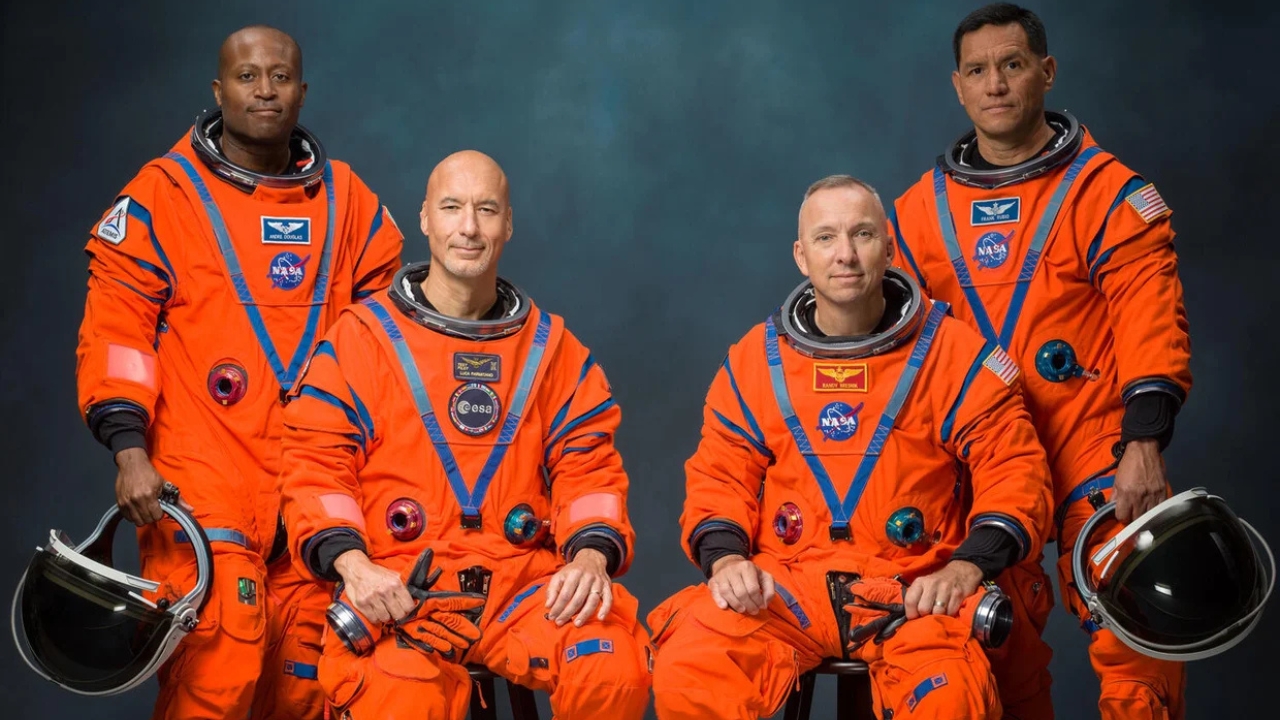
NASA recently unveiled the four-man lineup for the upcoming Artemis III test voyage, completely excluding women from the historic crew roster. After the all-male roster dropped on June 9, a wave of intense criticism instantly ignited across social media. Addressing the furious pushback on June 10, NASA Administrator Jared Isaacman explicitly stood by the agency’s choices, insisting that the astronauts were appointed solely on the basis of their professional backgrounds, specialized capabilities, and availability. Isaacman conceded on the social platform X that he noticed “reactions ranging from disappointment to outrage.” Still, he firmly defended the group, telling journalists, “I don’t think anyone should be reading into this.”
The deep frustration from space advocates was swift and vocal. Internet influencer Alexandra Doten blast-posted on X, calling electing an entirely male crew “an insane choice.” On Reddit, space enthusiasts echoed the same exasperation, with one widely cited post calling the decision “massively upsetting.” The disgruntled user added, “Women represent 50 percent of the population… They deserve at least one seat on every mission from a government run agency.” Lifestyle science writer Chelsea Gohd also pointed out that females comprise about 40 percent of the active astronaut corps, writing that the decision was incredibly “Disappointing.”

In an interview broadcast by CNN, mission commander Randy Bresnik claimed the all-male grouping was “certainly not intentional.” Bresnik, a 58-year-old military test veteran, will lead the low-Earth orbit test flight alongside Italian air force pilot Luca Parmitano, 49, engineering expert Andre Douglas, 40, and medical doctor Frank Rubio, 49. Backup flyer Bob Hines highlighted that while the roster lacks gender diversity, the crew brings a wide array of cultural heritages, including Salvadoran, African-American, Italian, and Slovenian backgrounds.
The high-stakes flight, scheduled to lift off no earlier than summer 2027, will spend two weeks testing critical docking systems with commercial moon landers engineered by Elon Musk‘s SpaceX and Jeff Bezos‘ Blue Origin. The space program is operating amid massive geopolitical tension, as a White House executive order demands a return by 2028, with a strict deadline looming. Complicating matters, Blue Origin recently suffered a devastating engine explosion on May 28, which severely damaged its Florida launch facility.
Despite the ongoing drama and accusations of a quiet diversity rollback, Isaacman notes that the agency’s leadership remains nearly half female. He concluded that these specific specialists are heavily qualified and deserve praise, urging fans to trust the training pipeline for future moon-walking adventures. On X, doctoral student Jasmine Singh summarized the painful impact on representation, calling the decision a “huge blow” for anyone inspired by trailblazing female flyers like Christina Koch. Singh concluded, “The people who aren’t upset about there being no women on artemis iii don’t understand what it means to see someone who looks like you accomplishing something so special.”